

The History of C-DaPS
Over a decade and a half, the Consortium has been dedicated to developing interdisciplinary research, spanning work on passive seismic data acquisition, processing and advanced interpretation, geomechanics, induced seismicity, machine learning, and distributed acoustic sensing (DAS).
Phase 1: 2010-2015
Microseismic monitoring has emerged as a vital tool for in situ monitoring of fracture processes, from hydrofrac stimulation and heavy-oil production to geothermal development and earthquake networks. Building on these established techniques, The Microseismic Industry Consortium (now C-DaPS) was founded by Mirko van der Baan (University of Alberta) and David Eaton (University of Calgary). The initiative was created to bridge advanced academic research with real-world energy applications, pioneering solutions in passive sensing, induced seismicity, and reservoir monitoring.
Phase 2: 2015-2020
Phase 2 expanded our scope beyond core microseismicity to encompass induced seismicity, hydraulic fracturing, and geomechanical analysis. Spanning advanced acquisition, processing, statistical analysis, and interpretation, our research program grew increasingly interdisciplinary. Marking a decade of impact, the Consortium was honored with the NSERC Synergy Award for its dedication to bridging industry challenges with cutting-edge technology.
Phase 3: 2020-2023
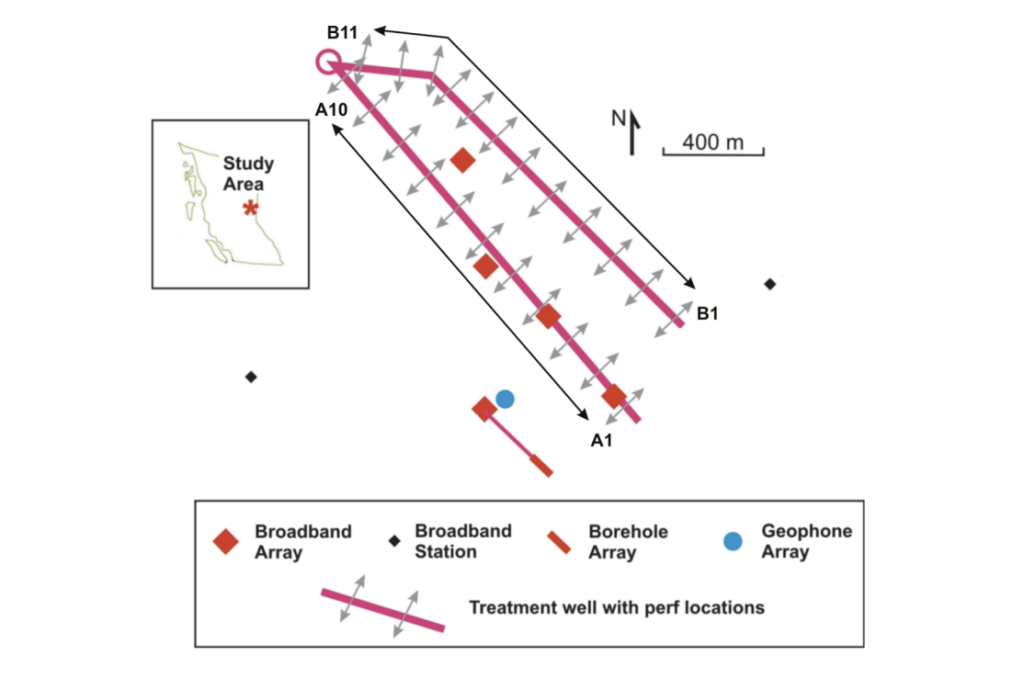
Despite COVID-19 disruptions, Phase 3 proved remarkably successful, during which we secured over C$10M in funding and trained 100+ highly qualified personnel, from MSc students to Postdoctoral fellows. We maintained our hallmark tradition of ambitious field programs by executing our second wireline-deployed Distributed Acoustic Sensing (DAS) acquisition, forming the landmark Canadian Dip-in-DAS (CanDiD) project alongside our 2021 experiments. Continuing a rich legacy of field acquisitions, from Rolla (2011) to ToC2ME (2016), these initiatives delivered unique hands-on training while driving the creation of deeply impactful intellectual property.
Phase 4: 2023-2026
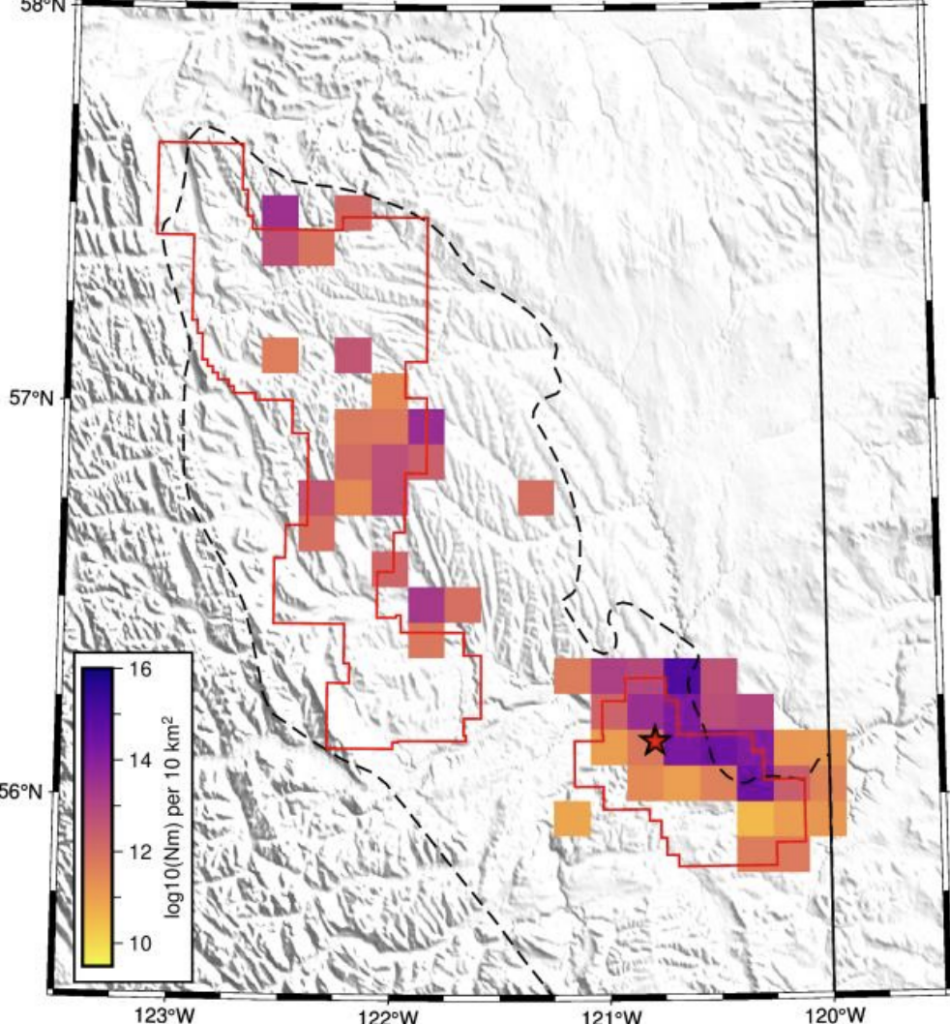
In reflection of our expanding scope, the Microseismic Industry Consortium was rebranded as the Consortium for Distributed and Passive Sensing (C-DaPS). Our applications span key energy and subsurface disciplines, including hydraulic treatments, steam injection, saltwater disposal, underground carbon storage, geothermal systems, and mining. By integrating state-of-the-art technologies such as InSAR (Interferometric Synthetic Aperture Radar), artificial intelligence, and machine learning, C-DaPS continues to advance data processing and passive sensing capabilities for complex subsurface environments.
Phase 5: 2026-Present
Following over 15 years of dedicated leadership, Professor David Eaton retired from the University of Calgary, with the Consortium transitioning leadership to the University of Alberta. To continue our mission of solving complex energy industry challenges, Dr. Juliana Leung joined as Co-Director. Today, C-DaPS research spans from microseismicity to integrated reservoir engineering. In recognition of our pioneering industry solutions, the Consortium was shortlisted for the prestigious ASTech Award in the Energy Innovation category in 2026.